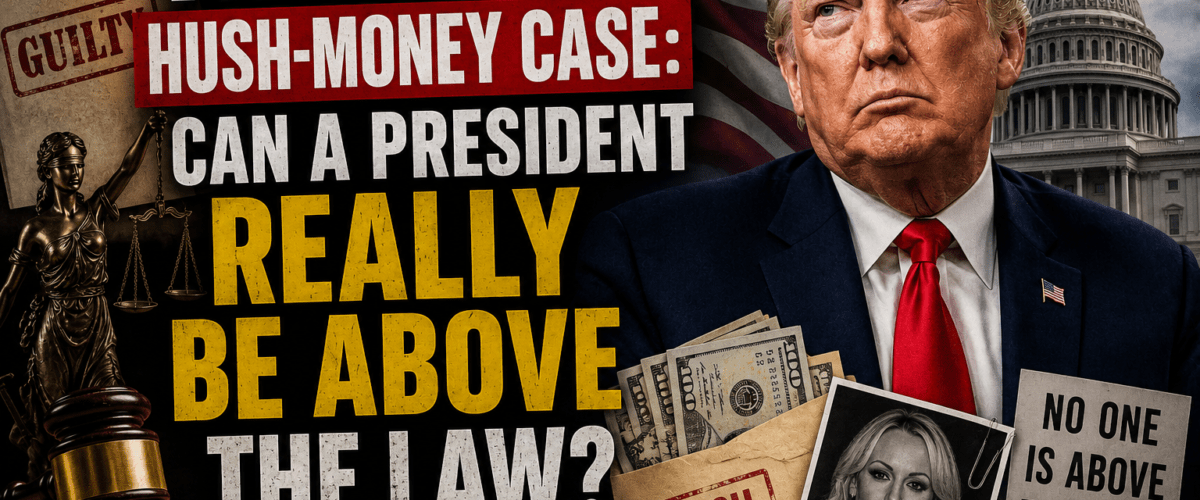
TRUMP’S HUSH-MONEY CASE: CAN A PRESIDENT REALLY BE ABOVE THE LAW?
A sitting American president is still fighting a criminal conviction. Whatever your politics, that is extraordinary.
Donald Trump’s legal battle over his New York hush-money conviction continues.
A federal judge has rejected Trump’s latest effort to move the case into federal court, keeping the long-running legal fight alive.
Trump and his supporters have repeatedly argued that the prosecution was politically motivated.
His opponents argue that presidential power should not erase criminal accountability.
And that brings America to an uncomfortable question:
If a president can be held criminally responsible before taking office, what happens after he returns to the White House?
This isn’t simply a Trump story.
It’s about the limits of presidential power—and whether America’s legal system applies equally to everyone.
Trump supporters see a politically motivated prosecution.
Critics see a historic test of the principle that nobody is above the law.
The legal battle isn’t over.
And neither is the political war surrounding it.
What do you think? Political persecution or accountability that should apply to everyone?