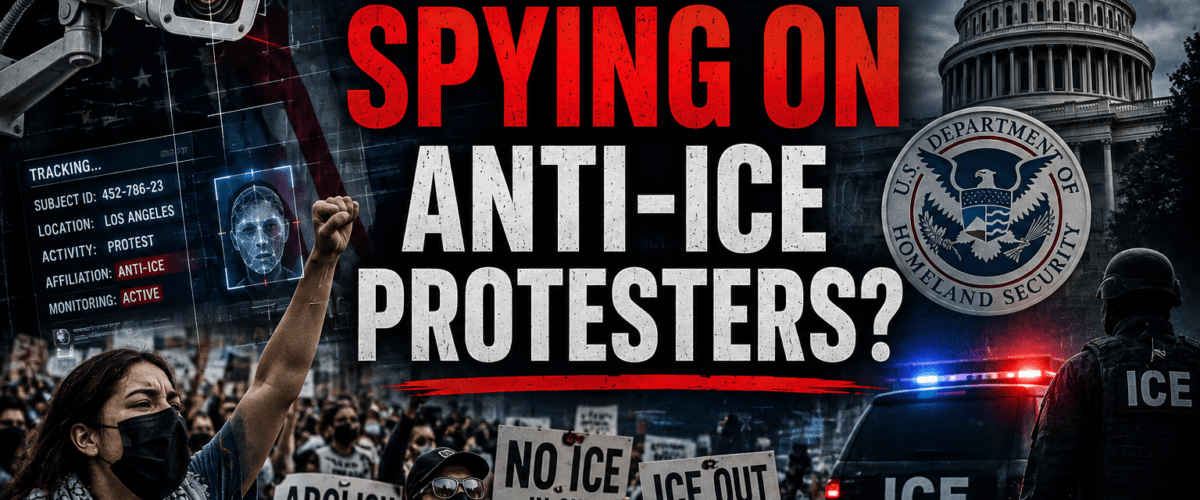
IS AMERICA SPYING ON ANTI-ICE PROTESTERS?
Anti-ICE Protesters and Government Surveillance: Where Does Security End and Political Intimidation Begin?
Newly disclosed records have raised questions about DHS surveillance of anti-ICE protesters and left-leaning groups. Here’s what Americans need to know.
🇺🇸 You have a constitutional right to protest the government. But what happens when the government starts watching the protesters?
⸻
America is built around a powerful constitutional principle:
Citizens have the right to criticize their government.
But recent reporting about federal surveillance of anti-ICE protesters has triggered a fierce debate over where legitimate law enforcement ends and political surveillance begins.
Documents reported in Augushttp://ikoninitvcom indicate that Department of Homeland Security personnel used undercover agents and infiltrated communications involving groups opposing the Trump administration’s immigration crackdown. The reporting also described surveillance of labor unions and left-leaning advocacy organizations. (The Guardian)
The allegations are explosive.
But they need to be examined carefully.
The government’s argument
Law enforcement agencies have a legitimate responsibility to investigate threats.
If a protest group is connected to violence, terrorism, financial crimes or other criminal conduct, authorities have the right—and potentially the duty—to investigate.
Political ideology does not provide immunity from criminal investigation.
That principle is important.
A peaceful protester should not be treated as a criminal simply because he opposes immigration enforcement.
But someone who commits a crime during a protest cannot claim constitutional protection simply because the crime occurred in a political context.
Where does the problem begin?
The controversy arises when government surveillance appears to focus on political activity itself.
If federal agents infiltrate a group because investigators have credible evidence of criminal conduct, that’s one situation.
If agents monitor people simply because they oppose government policy, that’s something completely different.
The First Amendment exists precisely to protect political disagreement.
America’s founders understood that governments can become hostile toward dissent.
That’s why freedom of speech and peaceful assembly receive constitutional protection.
Why anti-ICE protests matter
Immigration has become one of the most divisive political issues in America.
Trump’s administration has made immigration enforcement a central policy priority.
Supporters say aggressive enforcement is necessary to protect national borders and restore order.
Opponents argue that the administration’s methods are excessive and harmful to immigrant communities.
Those disagreements inevitably produce protests.
And protests are supposed to be uncomfortable.
A democracy isn’t supposed to silence everyone who disagrees with the government.
The surveillance question
The most important question is therefore not:
“Were federal agents present?”
It is:
“Why were they there?”
What evidence triggered the investigation?
What information did agents collect?
How long did surveillance continue?
Were criminal suspects being investigated—or political activists?
Were proper legal procedures followed?
And were people who had committed no crimes nevertheless subjected to government scrutiny because of their political beliefs?
Those are the questions that deserve answers.
This issue could affect both sides of politics
Liberals should care about this issue.
But conservatives should care too.
Imagine a future Republican administration investigating conservative gun-rights groups, religious organizations or pro-life activists simply because they oppose government policy.
Would conservatives accept that?
Now reverse the situation.
If a Democratic administration investigated conservative political groups using undercover agents without evidence of criminal activity, liberals would likely condemn it.
The principle should be the same.
Political surveillance is dangerous regardless of whose politics are being targeted.
The Public Verdict:
Law enforcement needs tools.
The government must be able to investigate genuine threats.
But democratic societies also need boundaries.
The government should never treat political disagreement as criminality.
If federal surveillance was based on credible evidence of criminal conduct, authorities should explain that evidence.
If political beliefs alone were enough to trigger surveillance, Americans should be deeply concerned.
What do you think?
Was the surveillance legitimate law enforcement—or is America crossing a dangerous line when political protesters become targets of federal investigations?
SPYING ON ANTI-ICE PROTESTERS?
Anti-ICE Protesters and Government Surveillance: Where Does Security End and Political Intimidation Begin?
Newly disclosed records have raised questions about DHS surveillance of anti-ICE protesters and left-leaning groups. Here’s what Americans need to know.
🇺🇸 You have a constitutional right to protest the government. But what happens when the government starts watching the protesters?
America is built around a powerful constitutional principle:
Citizens have the right to criticize their government.
But recent reporting about federal surveillance of anti-ICE protesters has triggered a fierce debate over where legitimate law enforcement ends and political surveillance begins.
Documents reported in ugust indicate that Department of Homeland Security personnel used undercover agents and infiltrated communications involving groups opposing the Trump administration’s immigration crackdown. The reporting also described surveillance of labor unions and left-leaning advocacy organizations. (The Guardian)
The allegations are explosive.But they need to be examined carefully.The government’s argument
Law enforcement agencies have a legitimate responsibility to investigate threats.
If a protest group is connected to violence, terrorism, financial crimes or other criminal conduct, authorities have the right—and potentially the duty—to investigate.
Political ideology does not provide immunity from criminal investigation.
That principle is important.
A peaceful protester should not be treated as a criminal simply because he opposes immigration enforcement.
But someone who commits a crime during a protest cannot claim constitutional protection simply because the crime occurred in a political context.
Where does the problem begin?
The controversy arises when government surveillance appears to focus on political activity itself.
If federal agents infiltrate a group because investigators have credible evidence of criminal conduct, that’s one situation.
If agents monitor people simply because they oppose government policy, that’s something completely different.
The First Amendment exists precisely to protect political disagreement.
America’s founders understood that governments can become hostile toward dissent.
That’s why freedom of speech and peaceful assembly receive constitutional protection.
Why anti-ICE protests matter
Immigration has become one of the most divisive political issues in America.
Trump’s administration has made immigration enforcement a central policy priority.
Supporters say aggressive enforcement is necessary to protect national borders and restore order.
Opponents argue that the administration’s methods are excessive and harmful to immigrant communities.
Those disagreements inevitably produce protests.And protests are supposed to be uncomfortable.
A democracy isn’t supposed to silence everyone who disagrees with the government.The surveillance question.The most important question is therefore not:
“Were federal agents present?”
It is:“Why were they there?”What evidence triggered the investigation?
What information did agents collect?
How long did surveillance continue?
Were criminal suspects being investigated or political activists?
Were proper legal procedures followed?
And were people who had committed no crimes nevertheless subjected to government scrutiny because of their political beliefs?
Those are the questions that deserve answers.
This issue could affect both sides of politics
Liberals should care about this issue.
But conservatives should care too.
Imagine a future Republican administration investigating conservative gun-rights groups, religious organizations or pro-life activists simply because they oppose government policy.
Would conservatives accept that?
Now reverse the situation.
If a Democratic administration investigated conservative political groups using undercover agents without evidence of criminal activity, liberals would likely condemn it.
The principle should be the same.
Political surveillance is dangerous regardless of whose politics are being targeted.
The Public Verdict:
Law enforcement needs tools.
The government must be able to investigate genuine threats.
But democratic societies also need boundaries.
The government should never treat political disagreement as criminality.
If federal surveillance was based on credible evidence of criminal conduct, authorities should explain that evidence.
If political beliefs alone were enough to trigger surveillance, Americans should be deeply concerned.
What do you think?
Was the surveillance legitimate law enforcement—or is America crossing a dangerous line when political protesters become targets of federal investigations?