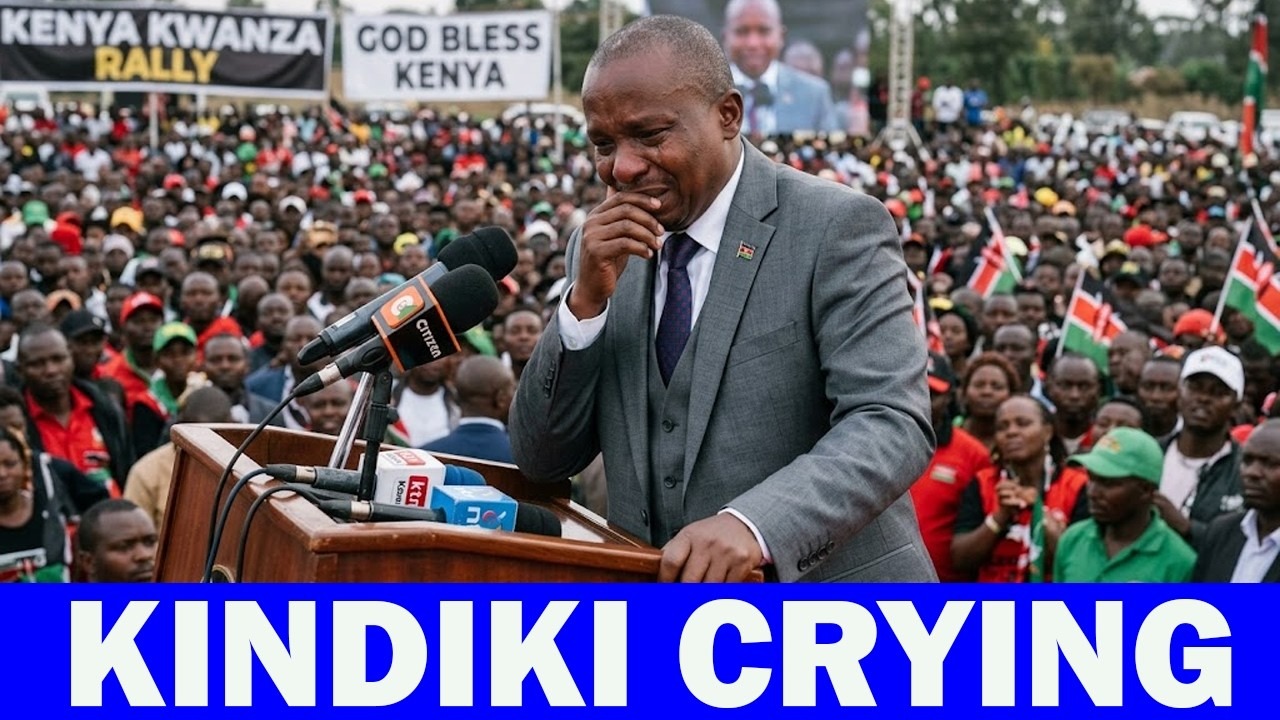
Breaking: Kindiki Forced to Resign or Face Impeachment by Farouk Kibet
Fresh political claims surrounding Deputy President Kithure Kindiki, President William Ruto and presidential aide Farouk Kibet have triggered renewed debate over the future of Kenya’s second-in-command.
However, amid the rapidly circulating claims, it is important to distinguish verified developments from social-media allegations and political speculation.
There is currently no credible evidence that Farouk Kibet has ordered Kithure Kindiki to resign or that a formal impeachment process against the Deputy President has been initiated by Kibet. Recent reporting has nevertheless confirmed that opposition politicians and some political allies of former Deputy President Rigathi Gachagua have called for Kindiki to step aside following fresh legal controversy surrounding his assumption of office.
The latest developments have therefore placed Kindiki’s political future back in the spotlight, particularly as Kenya approaches the 2027 General Election.
Why Claims That Kindiki Is Being Forced Out Are Spreading
Speculation about Kindiki’s position is not entirely new.
For months, political commentators and social-media users have debated whether President Ruto’s deputy remains firmly positioned within the administration. In July 2026, fact-checkers rejected viral graphics claiming that President Ruto had given Kindiki a December deadline to resign because he was allegedly unable to deliver votes politically.
Africa Check found no evidence that President Ruto had issued such an ultimatum, describing the viral quotation as fabricated.
The latest controversy is different, however, because opposition leaders have now publicly raised questions about Kindiki’s continued occupation of the Deputy Presidency following a significant Court of Appeal decision.
Court Ruling Adds New Pressure on Kindiki
A major development came after the Court of Appeal questioned the legality of the process through which a High Court bench had been constituted in litigation surrounding the removal of former Deputy President Rigathi Gachagua and Kindiki’s subsequent assumption of office.
According to NTV Kenya, opposition leaders have used the ruling to call for Kindiki’s resignation, arguing that the legal circumstances surrounding his swearing-in deserve renewed scrutiny.
The development has consequently created a new political argument around the Deputy President.
It is important, however, to distinguish a political demand for resignation from an actual constitutional removal process.
A politician calling on a deputy president to resign does not, by itself, remove that deputy president from office.
Kindiki Previously Said He Would Defend His Position
The renewed calls for Kindiki’s removal come only days after the Deputy President publicly dismissed suggestions that he could easily be pushed out of office.
Speaking in Tharaka Nithi County on August 21, 2026, Kindiki reportedly said he would defend his position and rejected suggestions that his removal was imminent. People Daily reported that the Deputy President invoked President Ruto’s own experience as a former deputy president and indicated that he would not simply surrender his office.
Radio Generation Kenya similarly reported that Kindiki declared that he would not give up his position without a fight.
Those remarks have taken on additional significance following the latest political and legal developments.
Where Does Farouk Kibet Fit Into the Story?
Farouk Kibet, a long-serving aide associated with President William Ruto, has repeatedly featured in online narratives concerning the relationship between the President and Deputy President Kindiki.
But previous viral claims involving Kibet and Kindiki have been shown to be misleading.
In January 2025, AFP Fact Check investigated a widely circulated video that social-media users claimed showed Kindiki lecturing Farouk Kibet. The fact-check found that the video did not depict Kindiki addressing Kibet. Instead, the footage showed Kindiki addressing his predecessor, Rigathi Gachagua.
Similarly, Africa Check previously investigated a viral video falsely claiming that Kindiki had resigned after being slapped by a presidential aide. The fact-check concluded that the video did not show Kindiki resigning following such an incident.
These previous cases demonstrate why extraordinary claims involving Kindiki and Farouk Kibet should be independently verified before being presented as fact.
Is There an Actual Impeachment Motion Against Kindiki?
At present, the available credible reporting does not establish that a completed constitutional impeachment process against Kithure Kindiki has been launched or that he has been formally removed from office.
This distinction is critical.
Kenya’s Constitution provides a specific procedure for removing a Deputy President through impeachment. Political criticism, calls for resignation and social-media campaigns are not equivalent to a completed impeachment.
The history of the Deputy Presidency demonstrates how consequential such a process can become.
Rigathi Gachagua was impeached by the National Assembly in October 2024. Parliament’s official record subsequently documented the nomination of Kithure Kindiki to fill the vacancy.
Kindiki was subsequently sworn in as Deputy President.
Kindiki’s Appointment Was Previously Upheld by the High Court
The legal controversy surrounding Kindiki’s position has already passed through the courts.
In June 2026, a three-judge High Court bench upheld Kindiki’s appointment as Deputy President, ruling that the constitutional process used to fill the vacancy did not require public participation.
The court relied on Article 149 of the Constitution, which provides for the filling of a vacancy in the Office of the Deputy President through presidential nomination followed by parliamentary approval.
That judgment represented an important legal defence of Kindiki’s position.
The subsequent appellate developments, however, have given political opponents fresh grounds to question aspects of the circumstances surrounding his assumption of office.
Why the 2027 Election Makes the Dispute More Significant
The political stakes are considerably higher because Kenya is moving toward the 2027 General Election.
The Deputy President traditionally occupies a strategically important position in a presidential administration. Beyond constitutional responsibilities, the office can carry enormous political significance because of the deputy’s role in regional mobilisation, coalition politics and presidential succession calculations.
Kindiki has increasingly been involved in political engagements as the 2027 contest approaches.
His recent remarks about Gachagua’s impeachment have also attracted considerable attention.
In August, Kindiki argued that Gachagua’s political isolation contributed to his downfall and suggested that stronger relationships with Members of Parliament and governors could have helped the former Deputy President survive the impeachment effort.
Kindiki’s comments are particularly notable because he is now operating in the same political environment in which his predecessor lost office.
Kindiki Says Political Relationships Matter
The Deputy President has presented the lesson from Gachagua’s removal as one of political survival.
According to recent reports, Kindiki argued that a Deputy President must maintain strong political relationships rather than become isolated from MPs and governors.
That argument has inevitably invited comparisons between Gachagua’s impeachment and the current pressure facing Kindiki.
Yet the circumstances are not identical.
Gachagua actually went through a parliamentary impeachment process in 2024. Current claims surrounding Kindiki, by contrast, involve political demands, legal controversy and speculation, rather than an established conclusion that he has been removed.
Could Kindiki Actually Be Impeached?
Constitutionally, a deputy president can face removal through the mechanisms established by the constitution.
But an impeachment cannot be treated as a foregone conclusion simply because politicians demand it.
A genuine impeachment process would require the relevant constitutional and parliamentary steps to be followed.
Consequently, claims that “Kindiki has been impeached”, “Kindiki has been forced to resign”, or “Farouk Kibet has ordered Kindiki out” should not be treated as established facts unless supported by official statements or credible reporting.
The distinction is particularly important in an era when fabricated graphics, edited videos and sensational headlines can spread rapidly across Facebook, TikTok, YouTube and WhatsApp.
What Is Confirmed So Far?
Several facts can currently be separated from the speculation.
First, Kithure Kindiki remains Deputy President according to the latest credible reports.
Second, opposition politicians have publicly called for him to resign following the latest court developments.
Third, Kindiki has previously rejected suggestions that he can simply be removed from office and has indicated that he intends to defend his position.
Fourth, earlier viral claims that President Ruto had ordered Kindiki to resign were investigated and found to be unsupported.
Fifth, previous viral claims involving Farouk Kibet and Kindiki have also included misleading or false material.
Farouk Kibet and Kindiki: Separating Fact From Viral Claims
The phrase “Kindiki forced to resign by Farouk Kibet” may generate significant online attention, but the available evidence does not substantiate it as a confirmed event.
No credible source identified in the latest reporting establishes that Kibet personally ordered Kindiki to resign.
That does not mean political tensions within Kenya’s governing establishment should be ignored. It means that claims about specific individuals taking specific actions require evidence.
For readers following Kenyan politics, this distinction is especially important because the country’s political environment is becoming increasingly intense ahead of the 2027 election.
The Bigger Political Question
Ultimately, the debate surrounding Kindiki is larger than the question of whether one individual has demanded his resignation.
It concerns the stability of President William Ruto’s administration, the future of the Kenya Kwanza political coalition, the legacy of Gachagua’s impeachment and the political calculations ahead of 2027.
Kindiki’s position has already survived substantial legal scrutiny. His appointment was upheld by the High Court, while subsequent appellate proceedings have reopened political arguments about the circumstances surrounding his assumption of office.
For now, therefore, the most accurate description is that Kithure Kindiki is facing renewed political pressure and calls for resignation—not that he has been forced to resign or formally impeached.
Conclusion: Is Kindiki Really Being Forced to Resign?
The latest political developments have unquestionably increased pressure on Deputy President Kithure Kindiki.
Opposition leaders are demanding his resignation, and the latest court developments have created fresh controversy around his tenure. At the same time, Kindiki has publicly signalled that he intends to remain in office and defend his position.
However, there is no verified evidence at present that Farouk Kibet has forced Kindiki to resign or that Kindiki has actually been removed through impeachment.
The situation remains politically fluid, and further statements from the Presidency, Parliament, the courts or Kindiki himself could significantly change the picture.
For now, the headline “Kindiki forced to resign or face impeachment by Farouk Kibet” should be treated as a political claim or allegation rather than an established fact. The distinction matters—not only for accurate reporting, but also for understanding the rapidly changing political landscape ahead of Kenya’s 2027 elections.