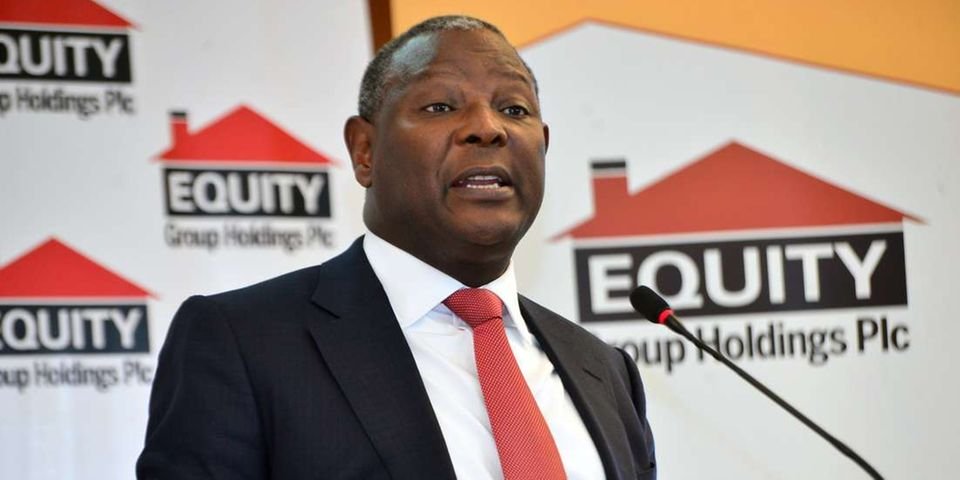
Kenya’s growing eCitizen financial controversy has taken a dramatic turn after a parliamentary inquiry involving Equity Bank Group CEO James Mwangi and several senior government officials appeared to stall months after the witnesses were summoned.
In March 2026, the National Assembly’s Public Accounts Committee summoned Mwangi, Attorney General Dorcas Oduor and executives from several companies linked to the eCitizen payment system to explain questions surrounding billions of shillings collected through the government’s digital platform.
Months later, the expected hearings have repeatedly been postponed.
That has raised an uncomfortable question: why has Parliament failed to conclude a probe involving billions of shillings in public revenue?
There is currently no evidence establishing that James Mwangi personally interfered with Parliament or instructed anyone to stop the inquiry. No criminal charges have been reported against him in connection with the matter.
But his summons, Equity Bank’s role in the disputed transactions and the repeated delays have created legitimate questions that Parliament has yet to answer publicly.
The Sh9.4 Billion Question
The controversy stems from an audit by Auditor-General Nancy Gathungu covering the 2021/22, 2022/23 and 2023/24 financial years.
The audit raised concerns over billions of shillings collected through eCitizen and transferred to private entities.
Among the most significant findings was the movement of approximately Sh6.3 billion into a Pesaflow account held at Equity Bank, with the account reportedly having been opened without the necessary authorisation from the National Treasury.
The broader audit identified approximately Sh9.4 billion that had been irregularly channelled through a number of private companies associated with the eCitizen payment ecosystem.
The companies mentioned included Pesa Flow Limited, Goldrock Limited, Olive Media Limited, Webmasters Kenya and Electronic Citizen Solutions.
The issue immediately raised questions about how private entities were allowed to handle government revenue and what controls were in place to protect public funds.
Why James Mwangi Was Summoned
Equity Bank became an important part of the parliamentary inquiry because one of the accounts at the centre of the controversy was held at the bank.
Treasury Principal Secretary Chris Kiptoo told the Public Accounts Committee that he became aware of the Pesaflow account after it had already been opened and that Treasury subsequently froze it.
The committee, chaired by Butere MP Tindi Mwale, wanted the various entities involved to explain how they had been authorised to collect government revenue, what agreements governed their operations and what happened to the money collected through the platform.
Mwangi was among those summoned.
That summons does not mean that Mwangi was found guilty of wrongdoing. Rather, it meant that Parliament wanted Equity Bank’s leadership to answer questions concerning the bank’s role in transactions under investigation.
That distinction is important.
The real accountability question is therefore not whether Mwangi has been proven guilty-it is whether Parliament will actually give him and the other summoned parties an opportunity to explain their roles publicly.
Then the Hearings Started Disappearing
The controversy intensified after scheduled committee hearings were repeatedly postponed.
Notices circulated among committee members in May indicated that some of the invited parties had requested additional time to prepare their submissions.
The hearings were subsequently pushed forward.
But as weeks turned into months, the public was left waiting for the committee to resume the inquiry.
Mwale has rejected suggestions that the committee was compromised.
However, the lack of a clear and publicly completed hearing process has inevitably created speculation.
That speculation should not be mistaken for proof of interference.
There is currently no established evidence showing that Mwangi personally contacted Mwale or any other MP to stop the investigation.
But that does not remove the legitimate public-interest question:
Why has a parliamentary inquiry into billions of shillings in government revenue remained unresolved for so long?
What Happened to the Earlier eCitizen Investigations?
The current controversy also recalls earlier questions surrounding companies involved in Kenya’s digital government payment infrastructure.
In one previous episode, the Directorate of Criminal Investigations sought information from government officials concerning allegations surrounding the issuance of driving licences through the eCitizen system.
Documents relating to agreements between government and private service providers were reportedly provided to investigators.
Yet, as with several other high-profile financial controversies in Kenya, the matter did not result in a clear public conclusion or widely reported prosecutions.
That history makes the latest parliamentary investigation even more significant.
The public has seen the familiar sequence before: an audit raises concerns, investigators request documents, officials are summoned—and then the process appears to lose momentum.
Whether that is simply institutional inefficiency, bureaucratic delay or something more serious is a question that requires evidence.
Pressure on Critics Raises Another Question
The controversy has also spilled beyond Parliament.
The Secretary-General of the Consumer Federation of Kenya has publicly spoken about pressure allegedly placed on him over social-media comments concerning Mwangi and the eCitizen controversy.
He reportedly maintained that describing Mwangi as a suspect was based on the fact that the Equity CEO had been summoned by Parliament and was not an assertion that he had committed a crime.
If individuals are being pressured to remove legitimate commentary about a parliamentary investigation, that deserves scrutiny.
But the same standard of evidence must apply here as it does to the allegations surrounding the eCitizen funds.
Who applied the pressure?
Who authorised it?
Was it connected to Equity Bank, James Mwangi or another party involved in the controversy?
Those questions should be answered with evidence rather than speculation.
Government Officials Have Appeared So Why Not Finish the Probe?
There is another striking aspect of the controversy.
Several senior government officials appeared before the Public Accounts Committee and answered questions concerning the eCitizen system, licensing arrangements and government oversight.
Treasury PS Chris Kiptoo, Immigration and Citizen Services PS Belio Kipsang and ICT and Digital Economy PS John Tanui were among officials who faced questions during the parliamentary process.
Their appearances demonstrated that the committee was capable of conducting public scrutiny.
That makes the subsequent delays involving the other summoned parties more difficult to ignore.
If Parliament has the power to summon witnesses, it also has a responsibility to ensure that those summonses result in a meaningful hearing.
A summons that is repeatedly postponed without a clear conclusion risks becoming little more than a headline.
The Questions Parliament Must Answer
The eCitizen platform handles payments for essential government services, including passports, driving licences, business permits and land-related services.
Millions of Kenyans use it.
That makes any allegation involving billions of shillings collected through the platform a matter of enormous public interest.
Parliament therefore needs to provide clear answers.
Why were private accounts used to handle government revenue?
Who authorised the arrangements?
What due diligence was undertaken by the financial institutions involved?
How much money was actually transferred?
How much has been recovered?
And most importantly, why has the parliamentary inquiry not been brought to a clear public conclusion?
James Mwangi and Equity Bank should have the opportunity to answer questions concerning their role.
So should the government officials, private companies and other institutions named in the audit.
But the public also deserves something else
A Test for Parliament
The Sh9.4 billion eCitizen controversy is bigger than one bank, one CEO or one parliamentary committee.
It is a test of whether Kenya’s public institutions can follow billions of shillings from the point at which citizens pay government fees to the point at which that money reaches the public treasury.
If there was a legitimate explanation for the transactions, those responsible should be allowed to give it on the record.
If mistakes were made, those responsible should be held accountable.
And if public money was unlawfully diverted, the country deserves to know who benefited and what happened to the funds.
But none of those questions can be answered while the hearings remain stuck in postponements.
There is no established evidence that James Mwangi personally influenced Parliament to abandon the investigation.
What is established is that he was summoned, the inquiry has faced repeated delays, and billions of shillings in eCitizen transactions remain the subject of serious public scrutiny.
That alone makes the question unavoidable:
When will Parliament finally finish the job?